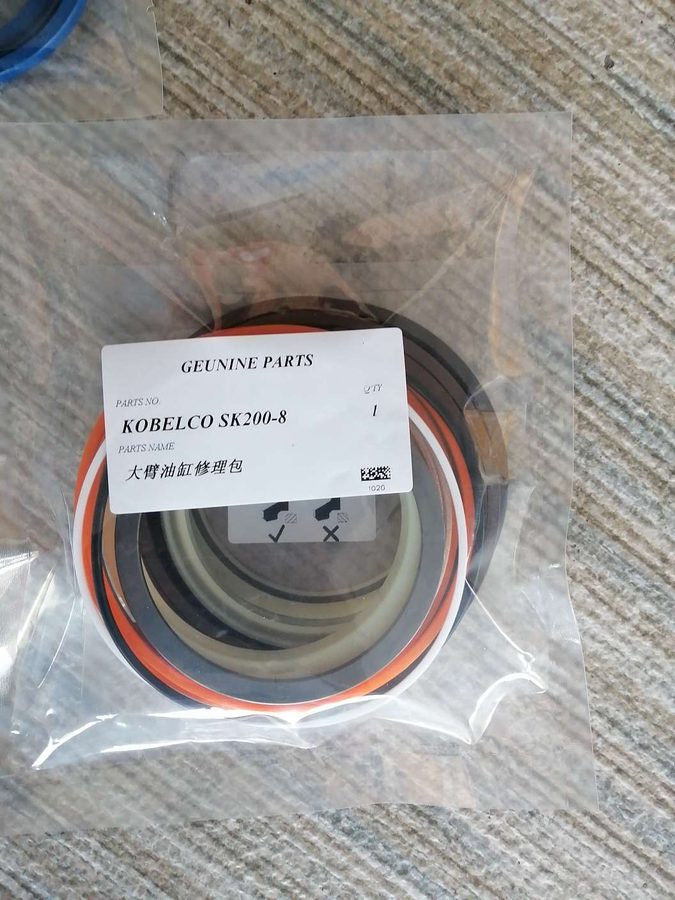
A cylinder reseal is one of the few jobs where a cheap mistake is invisible until the machine is back in the cut. The seals go in, the rod moves, the job looks finished - and three weeks later the same cylinder weeps from the wiper because the kit was for a neighboring generation, or the piston seal rolled during assembly because the bore was not checked. Guangzhou Shenyue Machinery Technology Co., Ltd. supplies cylinder repair kits and complete cylinder assemblies for Kobelco machines, and this post explains what the bag actually contains and how to confirm the kit before the machine is opened.
What is inside a repair kit
A typical boom or arm cylinder kit is a layered set, not a single seal. Working from the rod end inward, the bag holds the dust wiper, the rod seal, a buffer or backup ring behind it, the piston seals, piston wear rings, the gland O-ring and its backups, and often the gland bearing or guide ring. Some kits also include the piston nut seal and the small O-rings for the cushion or end-stroke fittings.
This is why the kit number is quoted against the cylinder, not the machine. In our records the boom cylinder repair kit for the SK200-8 class is listed under the markings YN01V00151R300C and YN01V00151R700C, photographed in its bag with the machine class printed on the label. Both markings sit against one kit position in our records; the desk confirms which one applies to the cylinder on your machine before the order is packed.
Reseal or replace: the four measurements
Most cylinders are resealable, and most replacement decisions are made on wear that a seal kit cannot fix. Four checks settle it:
Rod condition. Chrome that is scored, pitted or flaking will destroy a new rod seal in weeks. Light polishing marks are acceptable; anything that catches a fingernail is not. Bore condition. Scoring deep enough to feel, or a bore worn oval at the point where the piston parks, means the tube is the problem, not the seals. Gland and threads. Cracked gland castings and stretched or galled gland threads cannot be sealed with a kit. Pin bores and mounts. A cylinder with worn rod-eye bushings is usually cheaper to replace as an assembly than to rebuild and re-bush.
Where the rod and bore are sound, a kit is the right answer by a wide margin. Where the rod is scored through the chrome, the economics flip: the replacement rod plus labor often approaches the price of a complete assembly.
The two failures that kill a fresh reseal
The first is dirt. A cylinder opened in a dusty yard, wiped with a rag that leaves lint, and closed with grit on the rod seal will leak again before the first service interval. Clean the rod, the gland area and the bench before anything comes apart, cap the ports, and keep the new seals in their packaging until the moment they go in.
Before you open the cylinder: write down the cylinder's own number stamped on the barrel, photograph the gland and the rod eye, and measure the rod diameter at an unworn section. Guangzhou Shenyue Machinery Technology Co., Ltd. quotes the kit from those three items - the machine model alone is not enough, because the same model carried different cylinders across generations.
Why the cylinder number beats the model number
Boom, arm and bucket cylinders are sized to the front-end geometry, and the geometry changed between the -8, -10 and later generations even when the machine class stayed the same. A kit bought for "SK200-8 boom" without the cylinder number is a guess that lands correctly most of the time - and the remaining times are expensive. The stamping on the barrel, or the assembly number on the parts tag if the cylinder has been replaced before, settles it.
Seal material matters as much as shape. Nitrile covers most mineral-oil service; where the machine runs hot or the oil has been allowed to degrade, the seal compound and its temperature range are worth a question before ordering. General material guidance is published by NOK, and the seal families in our own records include the oil seal XZ0532E, quoted with LC32W01033P1C, for adjacent hydraulic positions.
Diagnosis comes before the kit: the cylinder seal and rod diagnosis guide separates a rod seal leak from a piston seal leak, and the cylinder overhaul guide covers the bench procedure. The arm cylinder assembly has its own listing at the product page, and cushion valve behavior is covered in the cushion valve guide.
Guangzhou Shenyue Machinery Technology Co., Ltd. has supplied these lines since 2007, holds 3,000+ part types on the shelf and 100,000+ part numbers available to order, and ships to 30+ countries. Shenyue is an independent supplier, not affiliated with and not authorized by Kobelco Construction Machinery Co., Ltd.
Frequently Asked Questions
Why is my kit listed under two numbers, YN01V00151R300C and YN01V00151R700C?
Both markings appear against the same boom cylinder repair kit position in our records, so the pair is not a choice for the buyer to make: send the cylinder number stamped on the barrel and Guangzhou Shenyue Machinery Technology Co., Ltd. confirms which marking applies to your machine before the order is packed. The arm cylinder assembly YN01V00175F2 follows the same rule on the assembly side.
How do I decide between a seal kit and a complete cylinder?
Measure first. If the chrome is sound, the bore is round and the gland threads are clean, a kit is the economical route and the repair kit YN01V00151R300C covers the SK200-8 class boom cylinder. If the rod is scored through the chrome, the bore is worn oval or the gland is cracked, the complete assembly - YN01V00175F2 for the SK200-8 arm cylinder - is usually the lower total cost once labor is counted.
Can I reuse the piston nut and gland bolts?
The piston nut can normally be reused if the threads and seating face are undamaged, but it must be torqued to the figure for that cylinder, not to a generic value. Gland bolts that show corrosion, stretched threads or a chewed hex are replaced. Our desk lists the hardware alongside the kit - the boom cylinder kit YN01V00151R300C is quoted with the hardware listed against it - so the bench is not waiting on a bolt when the seals are already open.