Most wrong-quantity orders are not carelessness. The buyer looked up the part, the part number was right, and the order still arrived short - because the machine carries two, four or more of that part and the order was written for one. Guangzhou Shenyue Machinery Technology Co., Ltd. supplies Kobelco parts to workshops across 30+ countries, and the quantity column is the first thing our own staff check before quoting. This post explains how to read it and which counts matter most - and it pairs with our catalog index and figure reading guide, which covers the number itself. The official Kobelco Japan site publishes the machine lineup behind the catalog structure.
What the quantity column actually says
In the paper parts book and in the digital catalog, every line carries a per-unit quantity: how many of that part the standard machine carries. It is a count of positions on the machine, not a recommendation and not a pack size. A hydraulic main pump reads 1. A travel motor reads 2, one per side. A swing motor reads 1. Cylinder counts follow the front-end layout - boom cylinders read 2 on a standard arm, the arm cylinder and bucket cylinder read 1 each.
The column also matters when the count is not obvious. Bearings, seals, washers and shims are where short orders happen, because nobody pictures a bearing in multiples.
One more habit separates the clean orders from the corrected ones: the count is read from the catalog for the exact serial, not carried over from the last machine of similar size. Two 20-ton machines a generation apart can run different roller counts and different engine cylinder numbers, and the difference only shows in the column.
Engine parts are counted by cylinder
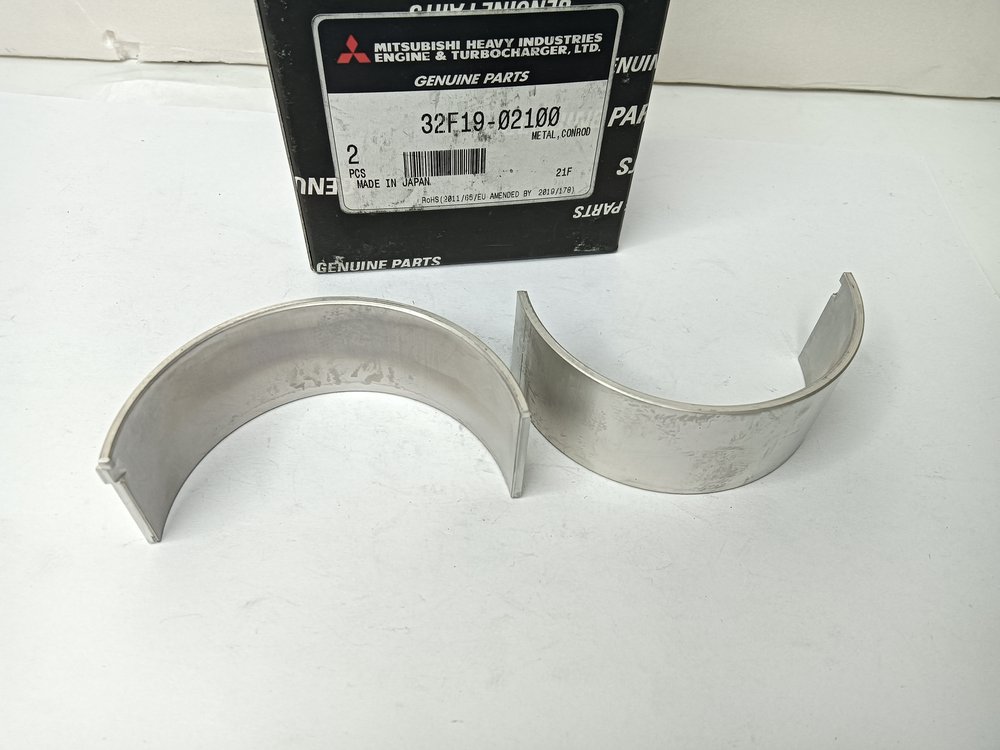
Anything inside the engine is multiplied by the cylinder count. The connecting rod bearing VA32F1902100 in our records sits in that category: one per cylinder, so a four-cylinder engine takes four and a six-cylinder engine takes six. The same logic runs through injectors, valve sets, piston groups and cylinder liners. When the engine under the hood differs from the one the model name suggests, the quantity changes with it - which is why we ask for the engine number on every engine-side order at Guangzhou Shenyue Machinery Technology Co., Ltd.
Two questions before you confirm the order: how many positions does the machine carry, and how many of those positions do you intend to service this visit? Servicing one travel motor out of two is a legitimate choice - the point is to make it deliberately, with the quantity column open, rather than discovering the second side two weeks later.
Undercarriage counts run high
The undercarriage is where the quantity column earns its space. Track rollers, carrier rollers, sprocket segments and track bolts are counted per side and per machine, and the counts are model-specific - a 20-ton machine and a 30-ton machine do not share them. Guessing a roller count from memory is how orders come in at half the needed quantity. The catalog count for your serial number is the authority; our part number search page takes the model or the number and returns the positions it fits.
Quantity drives price, not just the order
Counts also shape the quote. Some parts are priced and boxed individually, some are boxed per cylinder, and a few heavy items are priced differently at multi-piece quantities. When a workshop orders two travel motors together, the freight in a single carton is often lower per unit than two separate shipments a month apart. That is a logistics fact, not a pricing promise - the quote itself depends on the part, the grade and the day.
How we apply the column for you
Send the model, the serial number and the job list, and Guangzhou Shenyue Machinery Technology Co., Ltd. returns the parts with the per-unit counts filled in, so a cylinder reseal arrives with the seals for every cylinder serviced, not just one. For buyers who start from the machine rather than from a number, our assembly group guide bridges the two approaches. The company holds 3,000+ part types on the shelf and 100,000+ part numbers available to order, and has supplied Kobelco parts since 2007. Every item is quoted as genuine, OEM or aftermarket, and the grade is stated on the quote line.
Need the parts this article talks about?
The quantity column is only useful once the number under it is right. If you are rebuilding an engine-side list or a full undercarriage refresh, send the serial and the scope, and the counts come back with the quote - checked against the catalog for your machine, not against memory.
Frequently Asked Questions
Does the quantity column in the Kobelco parts book show pack size?
No. It shows how many positions of that part the standard machine carries - one hydraulic main pump, two travel motors, one connecting rod bearing per cylinder. Pack size and pricing multiples are separate information that appears on the quotation, and Guangzhou Shenyue Machinery Technology Co., Ltd. states both on every quote line.
How many connecting rod bearings does one engine take?
One per cylinder. The connecting rod bearing VA32F1902100 in our records is a four-cylinder count on the J05-type engines, and a six-cylinder engine takes six. Confirm the cylinder count from the engine number rather than the excavator model name, because the engine under the hood is the authority.
Why do undercarriage orders so often arrive short?
Because rollers, segments and bolts are counted per side and per machine, and the count is model-specific. Ordering from memory instead of the catalog quantity column is the usual cause. Send the serial number with the order and the counts are verified before the quote is issued.
Can I service one travel motor now and the other later?
Yes, and it is a common choice on budget-controlled fleets. The point is to decide deliberately with the quantity column open - the machine carries two, so the second side will need the same parts eventually. Ordering both sides together also usually saves freight on a single carton.